
InclusivCare
Building continuous support into care management for chronic conditions
Oct. 23, 2026Personalized care plans, strong patient engagement
- Managing a high-acuity population, including patients with uncontrolled diabetes and hypertension
- Keeping patients engaged between visits and preventing care gaps
- Addressing social and practical barriers that can make treatment plans difficult to follow
- Giving care teams a consistent way to organize individual goals and monitor chronic care management populations over time
athenaOne
athenaOne VBC features:
- Care Plans
- Care Programs
Results*
Among patients assigned diabetes- and hypertension-related Care Plans, they saw remarkable improvement across key clinical indicators.
With Care Plans, Care Programs, and high-touch community support, InclusivCare created a holistic and continuous approach to diabetes and hypertension management.
2.3%
Average HbA1c reduction among enrolled patients
12.7/7.0 mmHg
Average reduction in systolic and diastolic blood pressure values
38.3%
Fewer patients with poor glycemic control compared to CMS average
For InclusivCare, managing chronic conditions like diabetes and hypertension means looking beyond the numbers in a patient’s chart.
Many of the patients the organization serves are balancing complex medical needs with equally complex day-to-day realities: transportation challenges, limited access to healthy food, work schedules, medication concerns, and other barriers that can make even a well-designed treatment plan difficult to follow.
That is why InclusivCare has built its care management model around continuous, individualized support. Rather than treating each visit as a standalone interaction, the team uses athenaOne Care Plans and Care Programs to help organize patient goals, monitor chronic disease populations, and keep care moving forward between appointments.
“We don’t want them to feel like they’re just a number,” said Deionca Howard, Quality Assurance Director. “We want them to know that we are here for them.”
Serving more than 15,000 patients annually across clinics and school-based health centers in Jefferson Parish, InclusivCare combines that technology foundation with outreach, education, care management, and community-based support designed to meet patients where they are.
Keeping the thread of care connected
At InclusivCare, patient engagement is a shared responsibility.
Front-desk and call-center staff conduct outreach. Care coordinators help close referral and care gaps. Care managers focus more intensively on patients managing higher-risk conditions. Whenever possible, patients leave with their next appointment already scheduled.
“We just try not to lose communication with our patients,” Howard said.
For patients enrolled in care management, athenaOne Care Plans help give that continuity structure. Care managers initiate the plan, providers review and approve it, and the team updates goals and tasks as they learn more about what works for each patient.
Engaging underserved and high-risk populations in their healthcare has long been a significant challenge. InclusivCare’s innovative, thoughtful model is opening new pathways to reach these communities and strengthen their connection to care.
Making the plan fit the patient
InclusivCare’s care managers start by asking questions.
What has worked before? What has not? Is a medication difficult to tolerate? Is the patient monitoring blood pressure or glucose consistently? Is food access affecting what they eat? Is the goal itself realistic?
“We want to make it realistic for the patient,” said Shannon Gabriel.
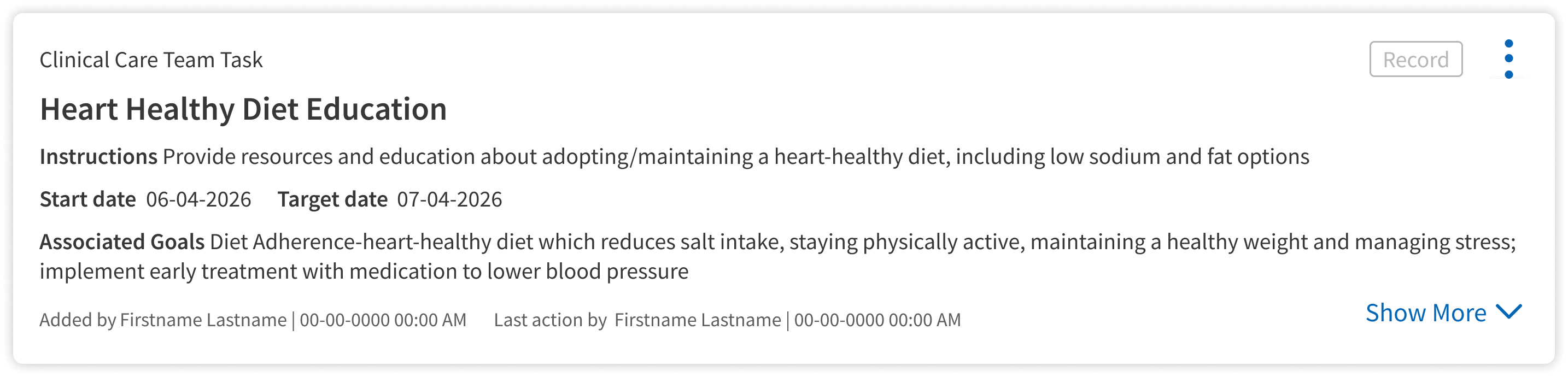
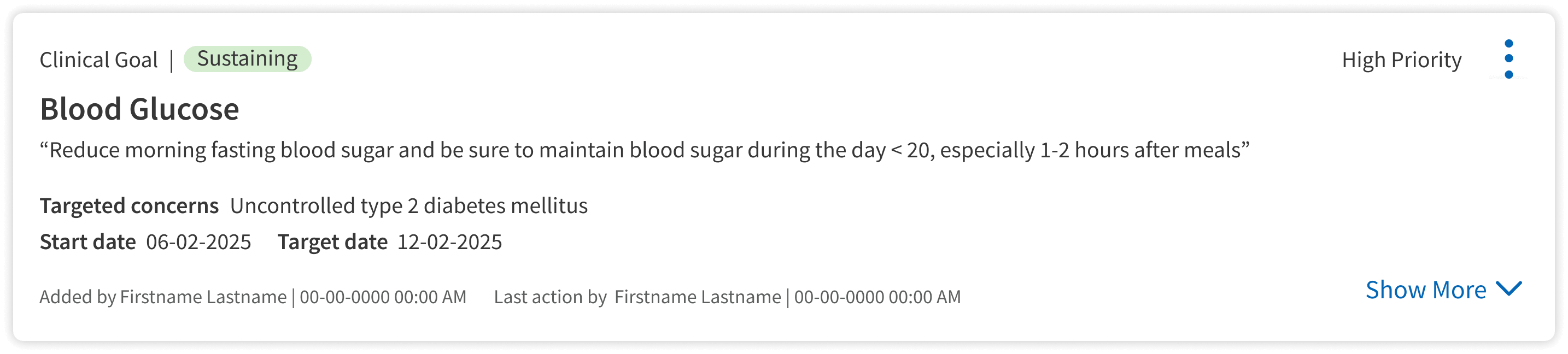
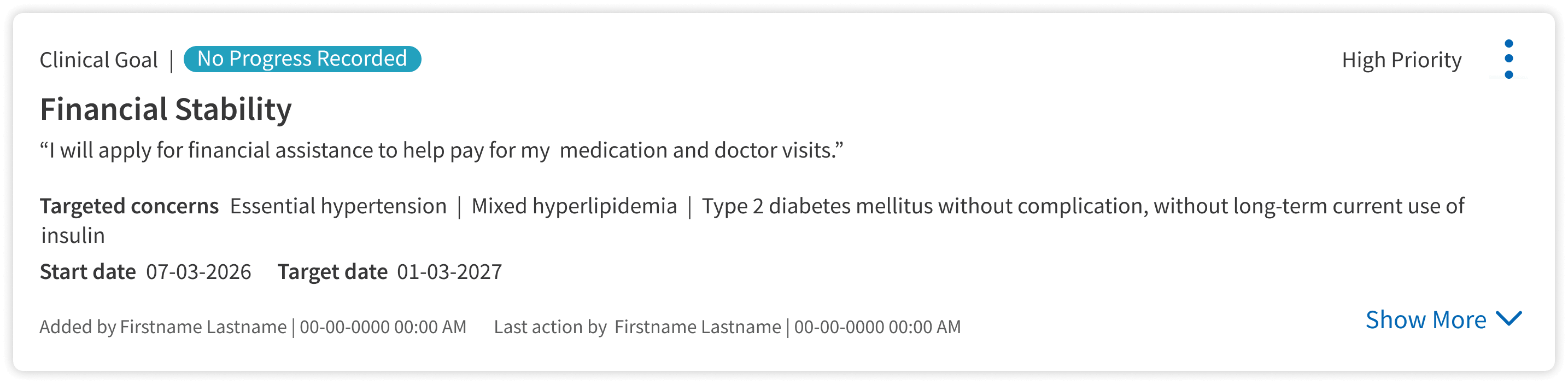
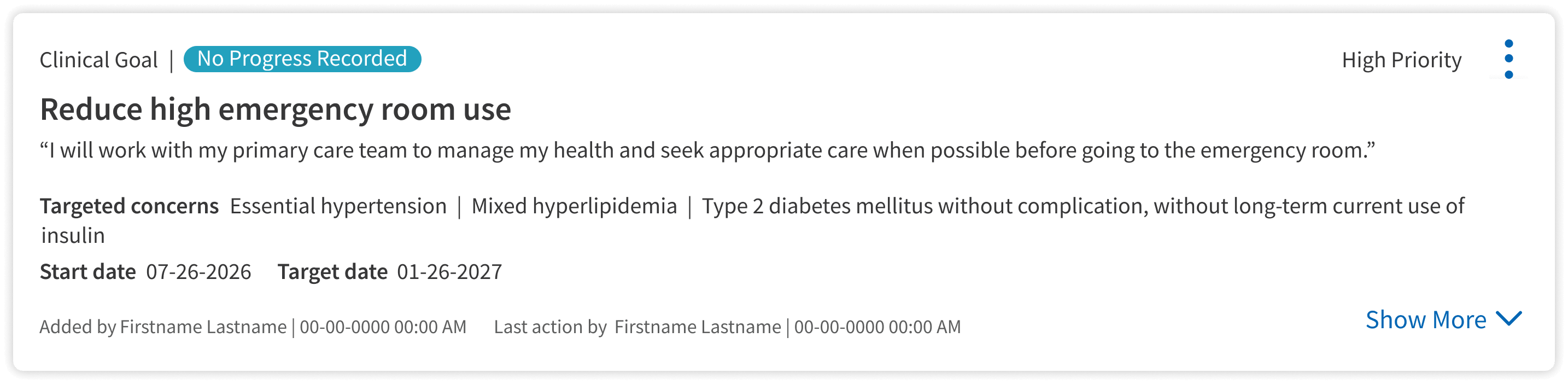
That philosophy shapes how the team builds Care Plans in athenaOne. Gabriel asks care managers to keep patient tasks to four or fewer so the plan feels manageable rather than overwhelming.
Care managers are intentional about phrasing patient goals in their own words, and ensuring they've worked together set something that feels motivating and attainable. For one patient, progress might begin with a five-pound weight-loss goal instead of focusing immediately on a much larger long-term target. For someone who regularly eats fast food, the team might identify healthier options at the restaurants they already visit instead of building a plan around habits they are unlikely to adopt. athenaOne’s Care Plans encourage providers to write goals in the words of their patients while also summarizing the goals for the providers and care team.
“When they see that early success, they’re more invested to continue,” Gabriel said.
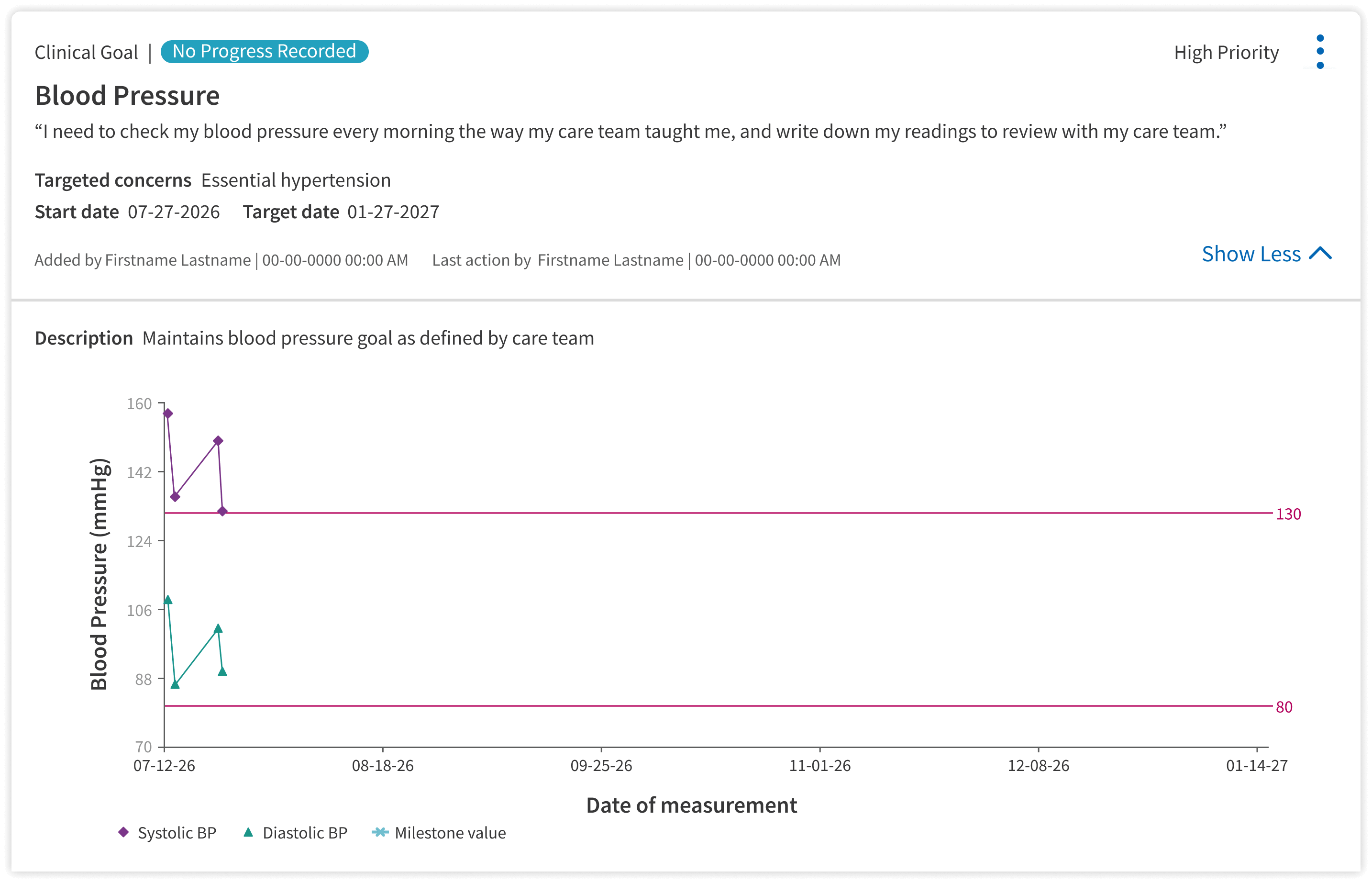
athenaOne Care Plans make it easy for providers to track these improvements by showing trends through charts for Blood Pressure and A1C-related goals that automatically take values that have been recorded from the vitals tab or through lab results and capturing them in an easy-to-view way for the whole care team.
Looking behind the number
When a clinical measure is out of range, InclusivCare does not stop at identifying the gap. The team wants to understand what is causing it.
Continuous glucose-monitoring data, for example, can reveal patterns that a single reading may miss. In one case, a recurring glucose drop led the care manager and clinical pharmacist to discover that a patient had misunderstood when to take nighttime insulin. The data opened the door to a conversation; the conversation uncovered the barrier.
“We’re trying to dig into the baseline of what is the cause for the non-compliance,” Gabriel said.
athenaOne Care Programs complement that patient-level work by enabling InclusivCare to organize diabetes, hypertension, and chronic care management populations and monitor how those groups are progressing over time. Pairing this with a unique Care Plan guarantees that each patient is receiving holistic, individualized care that targets their chronic conditions, while being specific to their daily lifestyle needs. Since athenaOne Care Plans functions as a collaborative space for the whole care team, each provider has visibility and autonomy into the patient’s care.
Together, Care Plans and Care Programs give the team both views it needs: what this patient needs next, and how the broader population is doing.
Extending the Care Plan into the community
Sometimes the barrier is not clinical at all.
InclusivCare’s Food is Medicine program gives patients hands-on nutrition education, recipes, and ingredients to take home. A fresh grocery truck brings produce into a community without a nearby grocery store. The organization also uses transportation support, telehealth, and community partnerships to address obstacles that can keep patients from reaching their goals.
Those services are not separate from the care management strategy. They are ways of making the care plan more achievable.
That approach is deeply connected to InclusivCare’s relationship with the communities it serves. Many employees live in those same communities.
“They’re more than just patients to us,” Howard said. “They are families, they are neighbors, they are church members.”
By pairing that community connection with the structure of athenaOne Care Plans and Care Programs, InclusivCare is turning chronic disease management into something more continuous: a process of setting realistic goals, understanding barriers, adjusting the plan, and staying connected long enough for progress to take hold.
Demonstrated impact in the community
InclusivCare’s impact is clear in the numbers. In comparison to systematic reviews of U.S. diabetes patients receiving care-management and team-based interventions which demonstrated a 0.2-0.8 percentage point reduction across A1C scores1 2 3 4, InclusivCare’s results substantially exceed that with a 2.3 average percentage point reduction across patients with diabetes-related care plans, comparing their A1C measurements prior to care plan implementation to the most recent result as of September 2026.*
Looking at the Quality measure, “Diabetes: Glycemic Status Assessment Greater than 9%” which measures the percentage of patients with poor glycemic control, the CMS average is 40.91% -- InclusivCare’s patient population sits at an impressive 25.26%, further demonstrating the impact of this care management work on their overall patient population.
Additionally, published intervention benchmarks that showcase the impact of similar team-based/care management interventions for hypertensive patients have shown a 3.5-6.3 mmHg/ 1.8-3.1 mmHg median reduction in systolic/diastolic blood pressure values 5 6 7. In comparison, InclusivCare demonstrated a 12.7/7.0 mmHg BP reduction across patients with blood pressure-associated goals for blood pressure measurements prior to care plan goal implementation compared to the most recent result.*
Engage your chronic care population
Learn more about tools for care management in athenaOne to understand how your organization can more easily track and manage care outcomes.
More FQHC resources
Bringing in the right help
- 31.9%Reduction in rejection rate
- 27%Reduction in denial rate
- 57,692Claims worked by Advisory Services team


Research and news
Explore more healthcare deep dives
Get thought leadership, research, and news about the business of healthcare.
- https://pubmed.ncbi.nlm.nih.gov/36522687/
- https://pubmed.ncbi.nlm.nih.gov/31227069/
- https://pubmed.ncbi.nlm.nih.gov/35634254/
- https://pubmed.ncbi.nlm.nih.gov/22439920/
- https://pmc.ncbi.nlm.nih.gov/articles/PMC4672378/
- https://pubmed.ncbi.nlm.nih.gov/36883454/
- https://pubmed.ncbi.nlm.nih.gov/39962166/
*athenaOne data as of September 2026
These results reflect the experience of one particular practice and are not necessarily what every athenahealth client should expect.